

For any individual stepping into the world of online gambling, the availability of a valid casino licence is not a marketing flourish but the sole reliable indicator of safety, fairness and legal operation https://spinbaraa.com.de/legal-and-affiliates/. In Germany, where regulatory frameworks have evolved significantly since the introduction of the Glücksspielstaatsvertrag 2021, consumers and business partners alike look for transparent licensing credentials. A licence signals players that the games are independently tested, that personal data will be handled with care and that a credible authority is available to mediate disputes. For affiliates who promote casino brands, understanding these licensing requirements goes beyond personal curiosity and into the realm of professional responsibility. Partnering with an operator that holds a verifiable licence safeguards not only the end user but also the affiliate’s own reputation and legal standing within the German market.
The Basis of Trust: Why Casino Licensing Is Important
Licensing is the system through which an online casino subjects itself to external oversight. A licensing authority, whether based in Malta, Curacao or Germany proper, imposes a set of technical and operational standards that an operator must regularly meet. These standards typically cover the randomness of game outcomes, the segregation of player funds from operational accounts and the enforcement of robust anti-money laundering procedures. For a German player, the understanding that a casino answers to a regulator means that any deviation from these rules can lead to fines, licence suspension or even a complete ban on operations. This turns the licence into a powerful enforcement tool. It transfers the balance of power away from a faceless corporation and places it into the hands of an impartial body whose sole purpose is to ensure that consumer protection is not an afterthought but the baseline condition of doing business.
Beyond the technical safeguards, a licence also serves as a gateway to reliable payment processing and data protection compliance. Licensed operators are required to partner only with payment service providers that meet strict security protocols, which is particularly relevant for German users who often prefer direct bank transfers, PayPal and Sofort. Equally, data protection under European Union rules, including the General Data Protection Regulation, becomes a binding obligation rather than a voluntary promise. In practice, this means that sensitive personal documents submitted during the know-your-customer verification process cannot be freely shared or sold. Affiliates who comprehend these granular protections are better equipped to communicate the value of a licensed environment to their audience, creating a message built on genuine substance rather than vague reassurance.
How an Official Licence Safeguards Players and Affiliates
As soon as a German player joins a regulated casino, security measures commence prior to the first deposit. Licensed operators must verify age and identity, effectively preventing underage gambling and identity theft. Should a player later feel that a bonus term was applied unfairly or that a withdrawal was unreasonably delayed, the licensing body provides a formal complaints channel that does not require costly litigation. This external mediator can compel the operator to release funds or rectify misleading practices. From a pragmatic view, that one protection converts a vague pledge into a binding entitlement. For associates, this tier of defence indicates that the casinos they advertise are less apt to face unsettled player issues, which accordingly maintains the reputation of the associate’s webpage and minimises the danger of collaborating with a brand that could suddenly cease operations along with its commission commitments.
The associate’s own legal situation is also profoundly impacted by the licence condition of the brands they advertise. German ad legislation and the Interstate Treaty on Gambling clarify that channelling users to unregulated operators can represent a compliance infraction, exposing the associate to notices, fines or stricter legal steps. An official licence consequently functions as a risk control mechanism. Beyond compliance, regulated operators usually sustain steadier partner programmes since their clientele is founded on confidence and durability, not on pushy single-time sign-ups. This results in stronger, more dependable commission flows and enables the partner to organise content and promotional efforts around a collaboration that is regulated by clear conditions and trustworthy reporting tools, like those provided via Spinbara Casino’s partner programme.
Spinbara Casino’s Commitment to Open Licensing
Transparency is not accomplished by simply setting a generic licence icon at the footer of a webpage. It demands the operator to uphold a dynamic, easily accessible compliance hub where visitors can review the licence certificate, comprehend which regulatory body oversees the operation and find links to responsible gambling tools and data protection policies. Spinbara Casino puts all of this information in plain sight, ensuring that a German user who goes to the legal https://rp-online.de/leben/gesundheit/psychologie/mobbing/mobbing-in-der-schule-wenn-das-kind-zum-opfer-wird_aid-47504067 page can immediately verify the casino’s credentials without having to submit an email or hold for a support chat. The licence number is presented, often hyperlinked to the regulator’s official register, so that anyone can ascertain in real time that the licence is valid and free of sanctions. This level of openness is not required everywhere, but the casino treats it as a baseline principle that bolsters the bond of trust with its community.
Addressing for the particular requirements of the German market, Spinbara Casino also integrates its licence obligations with localised elements that players value. The responsible gaming limits correspond with the spirit of the Glücksspielstaatsvertrag by delivering customisable deposit, loss and session time limits that are simple to set directly from the account dashboard. Additionally, formal self-exclusion requests are processed promptly, and players are given clear instructions on how to register with the OASIS system if they want to activate a nationwide blocking. For an affiliate, this comprehensive approach means that the brand can be suggested without reservation, because it proves that the legal and ethical commitments written into the licence are not merely theoretical but are actively executed in ways that honour the preferences and protections looked for by a German audience.
Managing Affiliate Programmes in a Controlled Environment
Engaging with an affiliate programme that is governed by a acknowledged licence brings a set of best practices that go far beyond simply inserting tracking links on a blog. A licence-oriented programme will typically grant affiliates with access to in-depth real-time data, transparent commission calculations and clear policies regarding chargebacks or bonus-related deductions. Spinbara Casino, for example, structures its affiliate terms around the principle of clarity, knowing that its licensing obligations oblige it to be forthright in all commercial relationships. This means that an affiliate can access all the relevant clauses, from payment schedules to campaign restrictions, shown in plain language rather than buried in convoluted legalese. For content creators targeting a German audience, where honesty and thoroughness are deeply appreciated traits, being able to point to a partner that operates under a verifiable licence adds a layer of editorial integrity that audiences can detect.
Furthermore, responsible marketing is not just a nice-to-have within a regulated framework; it is a condition of maintaining the licence itself. Licensed operators are obliged to ensure that their affiliates do not produce misleading advertisements, target minors or make unsubstantiated claims about winning odds. This is evident in the onboarding process, where an affiliate might be asked to demonstrate that their website carries a visible responsible gambling message and a link to a help organisation such as the Bundeszentrale für gesundheitliche Aufklärung. Spinbara Casino’s compliance team works closely with affiliates to ensure that all promotional materials meet these criteria, turning regulatory demands into a collaborative effort that safeguards the operator, the affiliate and, most importantly, the end user from unrealistic expectations and potential harm.
Prominent Licensing Jurisdictions Important to German Players
The regulatory map of online gambling includes several jurisdictions, each with its own philosophy, cost structure and level of player protection. German-facing casinos often possess licences from the Malta Gaming Authority, which has long been considered as a gold standard within Europe, combining rigorous compliance requirements with a player-first dispute resolution system. Other operators may display a licence from the Government of Curacao, a more cost-efficient option that encompasses multiple gaming verticals under a single master licence but does not offer the same depth of consumer protection or local legal recourse. The United Kingdom Gambling Commission, while exceptionally strict, rarely focuses on the German market directly. Within Germany itself, the Joint Gambling Authority of the federal states now provides national licences for online slots and poker, applying deposit limits, a compulsory five-euro monthly loss cap and extensive player monitoring through the OASIS self-exclusion system.
- Malta Gaming Authority: known for fund segregation, regular audits and a dedicated player support unit, with strong recognition across the EU.
- Curacao eGaming: offers a single licence for all game types, entailing lower fees and fewer operational obligations, though with less direct consumer protection enforcement.
- German Joint Gambling Authority (GlüStV 2021): enforces per-casino stake limits, a five-second spin interval for slots and compulsory OASIS database checks, offering high local legitimacy.
- Gibraltar Regulatory Authority: esteemed for its tax-efficient framework and robust financial oversight, often paired by a strong focus on compliance with British standards.
Deciphering Terms and Conditions By Means of a Licensing Lens
Casino terms and conditions are often treated as a monotonous scroll of fine print, but when examined through the lens of licensing, they transform into a formalized set of protections that mirror regulatory demands. A licensed operator is unable to insert hidden clauses that unjustly confiscate balances or apply unannounced wagering spikes, because such actions would contravene the fairness criteria established by the jurisdictional authority. Examining the bonus terms and withdrawal policies of a licensed casino such as Spinbara Casino becomes an exercise in recognizing the licence at work. Maximum withdrawal limits linked to no-deposit bonuses, identification document requirements and dormant account fees are all shaped by rules that forbid grossly one-sided terms. For the German player who spends the time to scrutinize these sections, the terms become less of a trap and more of a explanatory document that describes exactly how the commercial relationship will operate under the watchful eye of a third party.
A comprehensive understanding of how licensing influences standard contractual clauses is just as valuable for affiliates. When an affiliate assesses a new partner programme, the first step must be to examine the operator’s terms page not only for the commission structure but also for indications of regulatory alignment. Signs include explicit mention of the licence number, a clear data privacy policy mentioning GDPR, and clauses that specify the dispute resolution process. Spinbara Casino structures its terms to mirror these exact priorities, making it easy for an affiliate to ascertain that the partnership rests on a legally sound and regulator-approved foundation. This kind of licensing-aware reading of terms reduces unpleasant surprises and sets the stage for a commercial relationship marked by predictability, fairness and mutual respect for the rules that regulate the entire ecosystem.
Common Questions
What exactly is a casino licence and why is it required?
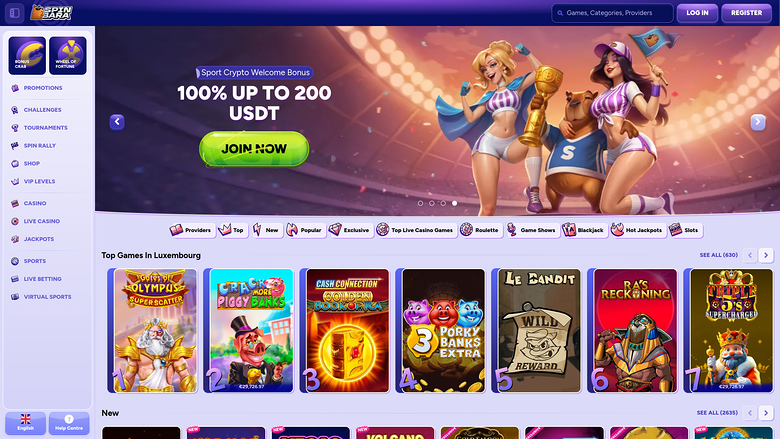
A casino licence is a legal authorisation awarded by a recognised regulatory body that authorises an operator to offer real-money gambling services. It is necessary because it obligates the casino to meet stringent standards related to game fairness, player fund protection, anti-money laundering controls and responsible gambling practices. Without a licence, an operator encounters no external accountability, putting players and business partners at significant legal and financial risk.
In what way can a German player confirm that a casino possesses a valid licence?
A German player can verify a licence by moving to the bottom of the casino’s homepage in which the licence number and regulator’s logo are shown. Selecting the logo or the hyperlinked licence number should directly link to the regulator’s public register, where the active status can be confirmed. If this link is missing or the details do not align, the player should avoid depositing any funds.
What licensing jurisdictions are regarded most reputable for online casinos?
Among the most respected are the Malta Gaming Authority, the United Kingdom Gambling Commission, the Gibraltar Regulatory Authority and the German Joint Gambling Authority under the Glücksspielstaatsvertrag 2021. Each of these bodies enforces detailed compliance frameworks, regular technical audits and robust player complaint systems. Curacao eGaming is widely used but generally offers a lighter regulatory touch and less direct consumer protection.
Are all casino licences provide the same level of player protection?
No, player protection changes significantly between licensing bodies. A licence from Malta or Germany grants access to formal mediation and strict fund segregation rules, whereas a Curacao licence historically provides fewer avenues for individual dispute resolution. German players should prioritise operators that display licences renowned for rigorous enforcement, as this directly affects the practicality of recovering funds or resolving grievances if a problem arises.
What risks do affiliates face if they promote an unlicensed casino?
Partners promoting unlicensed casinos face serious legal and financial hazards within Germany. Advertising such providers can contravene the Interstate Treaty on Gambling, leading to formal warnings, fines and harm to the affiliate’s professional reputation. Additionally, unlicensed operators often fail to honor commission payments or modify programme terms without notice, stranding the affiliate without legal recourse and with a significantly reduced ability to maintain audience trust.
By what means do licensing requirements affect a casino’s bonus terms and conditions?
Licensing requirements compel operators to create bonus terms that are clear, fair and free from confusing conditions. Wagering requirements, maximum bet limits during bonus play and withdrawal caps must be clearly stated and cannot be altered arbitrarily. This oversight guarantees that players obtain what was advertised, and any vagueness in promotional terms can be challenged through the regulator, providing a layer of enforceability that unlicensed casinos simply do not deliver.
For what reason is a dedicated legal and affiliates page important for a licensed casino?
A dedicated legal and affiliates page serves as a centralised transparency hub where visitors can quickly access licence credentials, terms and conditions, privacy policies and partnership details. This integration reflects a clear commitment to regulatory compliance and makes it straightforward for players and business collaborators to carry out due diligence. For a brand such as Spinbara Casino, it is a real demonstration that the obligations of the licence are managed with the utmost seriousness.